
 ES
ES  EN
EN  FR
FR  RU
RU 

 Entrega rápida


 Obtener precios
La elección del ladrillo afecta al comportamiento de la carga y a la resistencia a la intemperie a largo plazo, ya que cada ladrillo gestiona la transferencia de tensiones y la exposición a la humedad durante repetidos ciclos de hielo-deshielo a lo largo de décadas.
Los ladrillos hechos a mano reflejan la artesanía mediante métodos de conformación artesanales, mientras que los fabricados a máquina ofrecen una estricta uniformidad con un control tamaño y forma para una instalación previsible resultados.
Los equipos de proyecto equilibran los objetivos de menor coste con el encanto de los ladrillos hechos a mano cuando una fachada debe mantener el carácter patrimonial dentro de una construcción moderna. Los límites de suministro y la experiencia del instalador influyen en los resultados, ya que cada tipo de ladrillo depende de un proveedor fiable para mantener los plazos y una calidad de construcción constante.
¿Qué son los ladrillos hechos a mano?
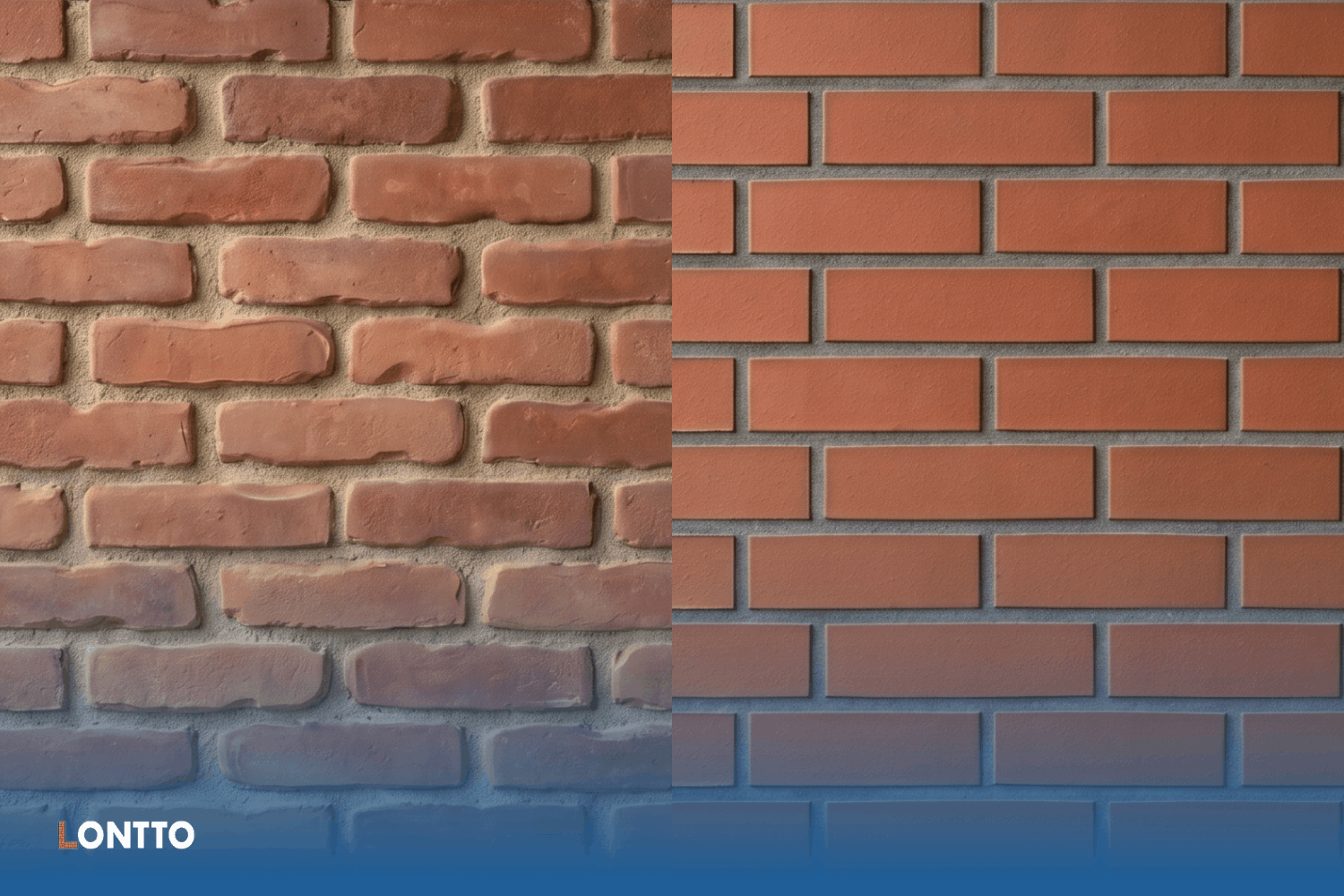
Un ladrillo hecho a mano se forma cuando hábiles ladrilleros moldean arcilla preparada bajo presión manual controlada y en moldes fijos de madera.
La mezcla de arcilla se ajusta a la humedad por lotes y cada ladrillo se fabrica prensando el material en un molde y soltándolo después en un lecho lijado. El secado al aire elimina el exceso de agua y, a continuación, las unidades se trasladan a un horno donde el proceso de cocción fija la resistencia y estabiliza el color final entre lotes.
Cada ladrillo hecho a mano muestra una variación notable en sus dimensiones porque el moldeado manual cambia el tamaño y la forma durante las etapas de moldeado y liberación. La producción sigue siendo baja porque el método requiere mucha mano de obra, lo que se traduce en una producción inferior a la de las líneas totalmente mecanizadas.
¿Qué son los ladrillos fabricados a máquina?
Los ladrillos fabricados a máquina se producen mediante sistemas automatizados que dan forma a cada ladrillo utilizando una fuerza mecánica controlada. Las líneas industriales extruyen o prensan el material en una columna continua y, a continuación, cortan cada ladrillo a una dimensión estándar antes de secarlo.
Cada ladrillo se fabrica con unos ajustes que se mantienen constantes durante una tirada, por lo que la producción alcanza una gran uniformidad en tamaño y forma de los lotes. El secado controlado precede a la entrada en el horno, donde el proceso de cocción estabiliza la estructura y produce un acabado de color uniforme.
La alta capacidad de producción permite a las plantas fabricar grandes volúmenes, lo que hace que los ladrillos fabricados a máquina sean adecuados para proyectos que requieren grandes cantidades con calidad repetible.
Diferencias entre ladrillos hechos a mano y a máquina
Los ladrillos hechos a mano frente a los fabricados a máquina influyen en la densidad, la porosidad y el comportamiento frente a la humedad, lo que afecta al rendimiento porque los métodos de conformado alteran las vías internas de cada ladrillo.
La variación de la superficie de los ladrillos hechos a mano afecta a la adherencia y la alineación, mientras que los fabricados a máquina los ladrillos ofrecen una geometría consistente, lo que permite una instalación más rápida. La selección depende de cómo cada tipo de ladrillo satisface las demandas estructurales y las condiciones de la obra durante la construcción.
Fabricación y coherencia
El conformado manual introduce variaciones dimensionales porque la presión del conformado modifica los bordes y la textura de la superficie de cada ladrillo. La geometría irregular produce líneas más suaves y caras menos definidas que la producción controlada.
Los sistemas automatizados mantienen tolerancias estrictas porque la presión y el conformado permanecen regulados durante cada ciclo. Los sistemas de acero extruyen o conforman el material en unidades uniformes con bordes afilados y perfiles uniformes.
El tiempo de secado varía en la producción de ladrillos artesanales porque la exposición ambiental modifica los índices de pérdida de humedad. El control automatizado mantiene las condiciones estables, lo que permite que los ladrillos fabricados a máquina se curen con tiempos predecibles y resultados repetibles.
Rendimiento in situ
Muchos ladrillos hechos a mano muestran una mayor absorción de agua debido a que los métodos de conformación crean una mayor porosidad dentro de cada ladrillo. Una mayor absorción aumenta el riesgo de congelación-descongelación cuando la especificación no coincide con las condiciones de exposición.
Los ladrillos densos fabricados a máquina mantienen índices de absorción más bajos, por lo que las unidades se comportan mejor en entornos expuestos. La resistencia varía en ambos grupos porque cada tipo de ladrillo depende de la calidad de las materias primas y de las condiciones de cocción.
La geometría irregular de los ladrillos hechos a mano aumenta el uso de mortero y ralentiza la alineación durante la instalación. Los perfiles uniformes de los ladrillos fabricados a máquina permiten una colocación más rápida y un control más estricto de las juntas en toda la mampostería estructural.
Coste y eficacia
Los ladrillos hechos a mano tienen un coste unitario más elevado porque la producción sigue siendo intensiva en mano de obra y la producción por ciclo sigue siendo limitada. El encofrado tradicional produce menos unidades al día, por lo que la oferta suele ser más limitada que la de los ladrillos fabricados a máquina en serie.
Los ladrillos fabricados a máquina reducen los costes unitarios porque las plantas automatizadas funcionan a gran capacidad de producción y mantienen un ritmo de ciclo estable. Las grandes instalaciones pueden producir grandes volúmenes semanales, lo que garantiza un suministro constante para grandes edificios de ladrillos.
Las construcciones de primera calidad utilizan ladrillos hechos a mano por su aspecto y su alineación con el patrimonio. Los grandes proyectos utilizan ladrillos fabricados a máquina por su escala y programación predecible.
Need to Produce Bricks at Scale?
Our brick making machines are built for commercial and industrial production. Get expert advice and a custom price quote — we respond within 24 hours.
Impacto medioambiental
La demanda energética varía porque cada ladrillo depende de la fuente de combustible y del diseño de la planta durante la fase de fabricación. El abastecimiento local puede reducir la energía del transporte en la producción de ladrillos artesanales cuando la arcilla permanece cerca de los lugares de formación.
La cocción ineficiente aumenta las emisiones cuando los hornos más antiguos funcionan sin recuperación de calor ni controles modernos. Las plantas industriales consumen más energía por hora, pero los ladrillos fabricados a máquina reducen la energía por unidad gracias a la escala. Las estructuras de ladrillo duran décadas o más, por lo que ambos tipos soportan una larga vida útil si se especifican correctamente.
Aplicaciones y casos prácticos
La elección de la aplicación depende de cómo se comporte cada tipo de ladrillo ante las exigencias del diseño y las condiciones de la obra en edificios de ladrillo reales. Los equipos de proyecto eligen entre ladrillos hechos a mano o a máquina en función de la función estructural, los objetivos estéticos y la velocidad de construcción requerida. construcción diferente programas.
Ladrillos hechos a mano
Los ladrillos hechos a mano se utilizan cuando la profundidad visual y la variación apoyan la intención del diseño a través de la mampostería vista. Los proyectos patrimoniales se basan en ladrillos de arcilla hechos a mano, ya que para igualar los ladrillos históricos se requiere una porosidad compatible y un movimiento de la humedad a través de los ensamblajes.
Los trabajos de restauración suelen utilizar ladrillos recuperados o unidades nuevas que reproducen el tamaño y la forma heredados para una integración precisa. Las construcciones a medida favorecen el encanto de los ladrillos hechos a mano, ya que la variación de color y textura crea una superficie rústica que no puede reproducirse. La fabricación a medida permite cambiar las dimensiones, de modo que las aberturas irregulares se alinean sin forzar la posición de las unidades estándar.
Ladrillos fabricados a máquina
Los ladrillos fabricados a máquina ofrecen un rendimiento constante para grandes proyectos que requieren rapidez y una instalación repetible en extensos muros de ladrillo. El diseño contemporáneo utiliza ladrillos extruidos con caras lisas y aristas vivas para lograr una estética moderna controlada en todas las superficies visibles.
Las plantas de gran volumen mantienen la producción, lo que permite a las instalaciones producir grandes cantidades que soportan calendarios rápidos para grandes edificios comerciales. Las aplicaciones estructurales utilizan unidades densas con absorción controlada, de modo que los cimientos y los sistemas de soporte de carga cumplen los objetivos de rendimiento definidos.
Las unidades de ingeniería admiten el uso en infraestructuras porque la densidad predecible mejora la resistencia a las cargas sostenidas y a las vibraciones.
Cómo elegir el tipo de ladrillo adecuado
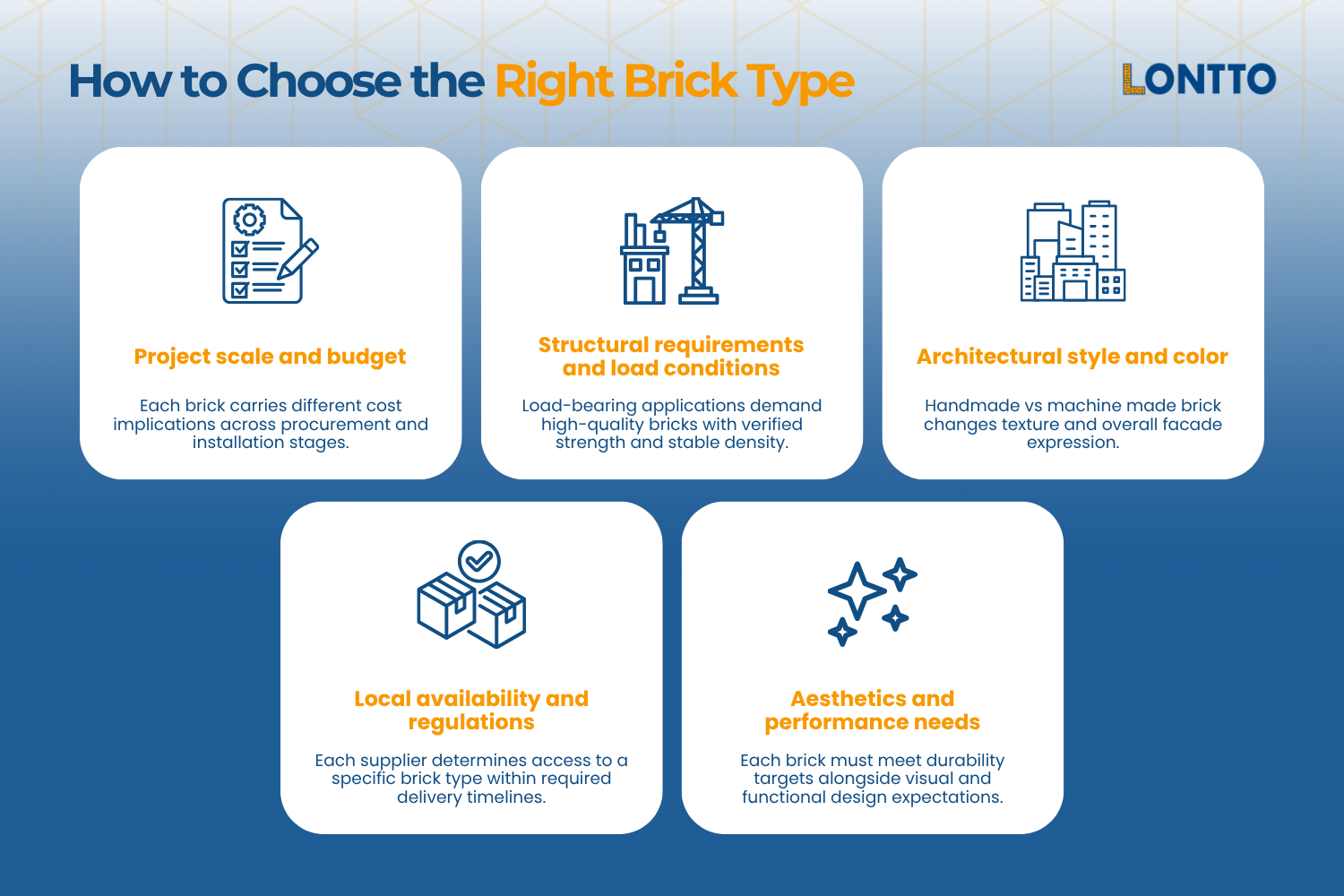
La selección depende de cómo se comporte cada tipo de ladrillo en función de los costes y las exigencias estructurales en proyectos reales. Los equipos de proyecto evalúan las limitaciones y la intención del diseño, ya que cada ladrillo debe cumplir unos objetivos de rendimiento y visuales durante la planificación de la construcción.
- Escala y presupuesto del proyecto: Cada ladrillo conlleva un coste diferente en las fases de adquisición e instalación.
- Requisitos estructurales y condiciones de carga: Las aplicaciones de carga exigen ladrillos de alta calidad con resistencia verificada y densidad estable.
- Estilo arquitectónico y color: El ladrillo hecho a mano frente al fabricado a máquina cambia la textura y la expresión general de la fachada.
- Disponibilidad y normativa locales: Cada proveedor determina el acceso a un tipo de ladrillo específico dentro de los plazos de entrega requeridos.
- Necesidades estéticas y de rendimiento: Cada ladrillo debe cumplir objetivos de durabilidad junto con expectativas de diseño visual y funcional.
Lontto fabrica equipos para la fabricación de ladrillos utilizado tanto en operaciones a pequeña escala como en la producción industrial de ladrillos fabricados a máquina.
La empresa cuenta con más de 30 años de experiencia y ofrece sistemas que van desde máquinas autónomas a plantas completas de hormigón celular, aumentando la capacidad de producción en todos los proyectos. Todas las líneas de máquinas cumplen las normas CE y la fábrica cuenta con la certificación ISO 9001, lo que garantiza una calidad de producción homogénea en todas las instalaciones del mundo.
Póngase en contacto con nosotros hoy mismo para hablar de sus necesidades de producción de ladrillos y encontrar la máquina adecuada para su capacidad de producción y los objetivos de su proyecto.
Preguntas frecuentes sobre ladrillos hechos a mano o a máquina
¿Se pueden combinar ladrillos hechos a mano y a máquina en una misma fachada?
Sí, puede combinarlos si sus espesores y tolerancias coinciden, de modo que las anchuras de las juntas y las trayectorias de las cargas sigan siendo compatibles en toda la fachada. Debe alinear los sistemas de anclaje y el comportamiento del movimiento para que la dilatación diferencial no cree grietas o puntos de tensión con el paso del tiempo.
¿Afectan los distintos tipos de ladrillo al futuro valor de reventa de un inmueble?
Pueden ayudar a aumentar el valor de reventa. Los compradores responden a la durabilidad y a la calidad de la fachada, por lo que un ladrillo bien detallado y con un rendimiento constante puede favorecer la reventa en muchos mercados. Tanto el atractivo visual como el rendimiento a largo plazo de la envolvente influyen en el valor percibido, independientemente de cómo se fabrique cada ladrillo.
¿Cómo influyen los ladrillos en el confort acústico de los espacios ocupados?
Las paredes de ladrillo más pesadas y densas aumentan la pérdida por transmisión del sonido, reduciendo la transferencia del ruido exterior a los espacios interiores en condiciones normales. Los sistemas de revestimiento más ligeros dejan pasar más sonido, por lo que la densidad del material y el diseño del conjunto de la pared afectan directamente al rendimiento acústico interior.
Volver arriba: Ladrillos hechos a mano o a máquina: Diferencias para la construcción moderna

Hable con nuestro Experto en máquinas de ladrillos
Póngase en contacto con nuestro agradable equipo hoy mismo para obtener una estimación del precio de una máquina bloquera.

Soy Chao Zhang, llevo más de 10 años trabajando en la industria de la fabricación de ladrillos. Tengo un profundo conocimiento e investigación sobre varios modelos de máquinas de fabricación de bloques, especialmente máquinas automáticas de ladrillos, máquinas de bloques de hormigón, máquinas de bloques de tierra comprimida, máquinas de ladrillos de arcilla, máquinas de ladrillos de cemento. Tengo un conocimiento especial de esta industria. Puedo ayudar a mis clientes a elegir la máquina de ladrillos adecuada y ayudarles a diseñar y construir una fábrica de producción de ladrillos. Si desea saberlo todo sobre las máquinas para fabricar ladrillos, póngase en contacto conmigo. Estaré encantado de ayudarle.
 Presupuesto
 Llámenos