
 RU
RU  EN
EN  FR
FR  ES
ES 

 Экспресс


 Получить цену
Знание разницы между экструдированным и прессованным кирпичом поможет вам выбрать правильный строительный материал по прочности, внешнему виду и долгосрочным характеристикам. Оба вида кирпича используются в строительстве по всему миру, но способ их изготовления, плотность, текстура и обработка отличаются. Эти изменения влияют на кирпичную кладку, долговечность, огнестойкость и внешний вид каждого кирпича после установки.
В современной кирпичной кладке производители используют автоматическую экструзию или механическое прессование для придания формы. Глина, сланцы и добавки в прочные блоки, обжигаемые в печи. Каждый процесс позволяет получить кирпич разного стиля, поверхности и структурных характеристик. Понимание различий поможет вам выбрать правильный тип кирпича для фасадов, фундаментов или подпорных стен в новых проектах.
Что такое экструдированный кирпич?
Экструдированный кирпич (также называемый кирпичом с проволочной нарезкой) изготавливается путем продавливания глины и сланца через стальную матрицу для формирования непрерывной колонны. Таким образом, получаются блоки одинакового размера и формы, что позволяет ускорить производство кирпича и придать единый внешний вид крупным проектам. После экструзии ряд проволок разрезает колонну на отдельные кирпичи, оставляя прямые края.
В экструдированных кирпичах обычно имеются отверстия, которые уменьшают вес, улучшают сушку и способствуют прочному сцеплению растворных швов. Эти отверстия также помогают сделать кирпич более легким и удобным для перемещения на стройплощадке.
Поскольку экструдированный кирпич создается в непрерывном процессе, его можно производить в больших масштабах. Благодаря такому постоянству они часто используются для облицовки коммерческих кирпичных стен, фасадов жилых домов и любых других работ, где важен единый внешний вид.
Плюсы экструдированного кирпича
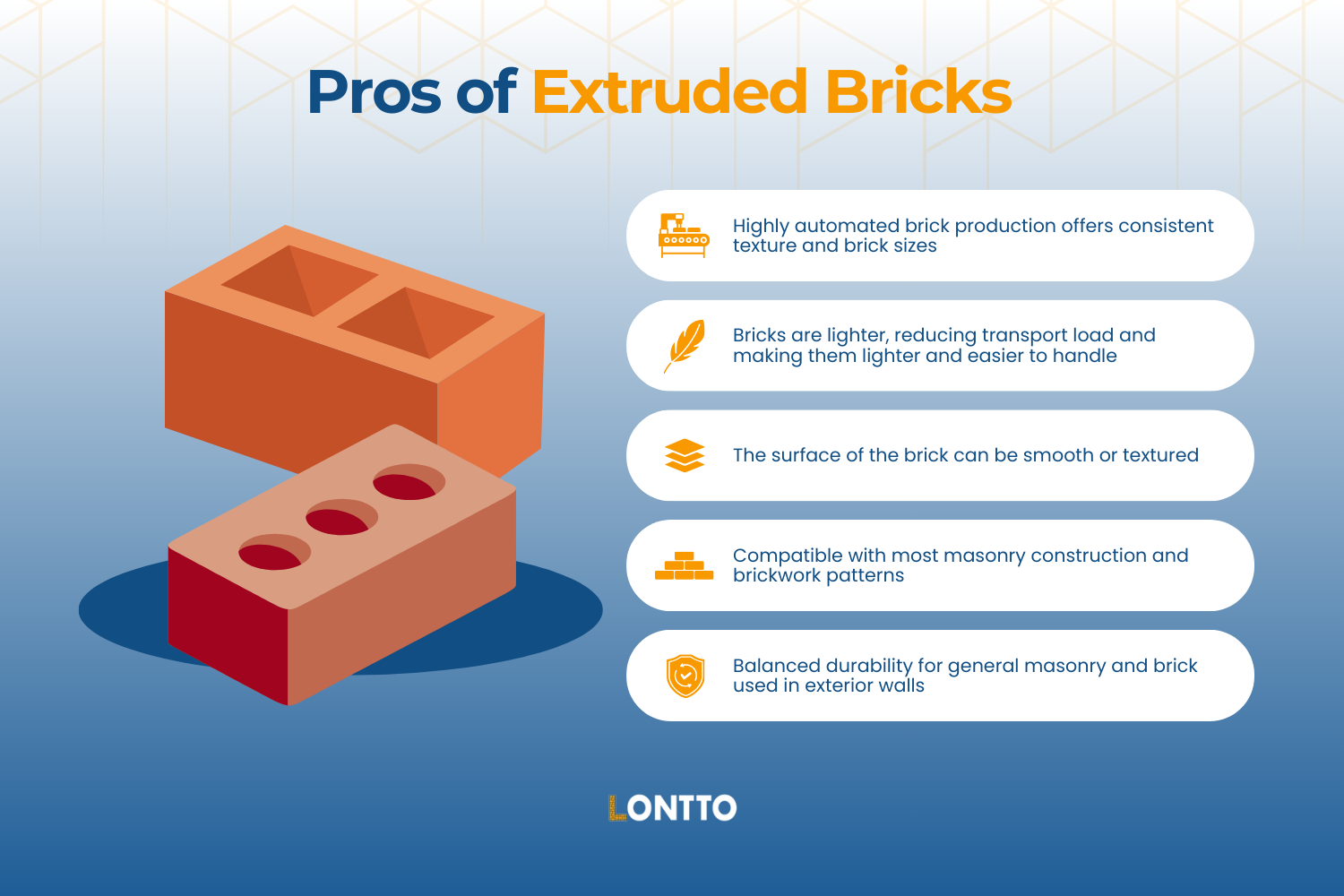
- Высокоавтоматизированное производство кирпича обеспечивает постоянство фактуры и размеров кирпича
- Кирпичи легче, что снижает транспортную нагрузку и делает их более легкими и удобными в обращении
- Поверхность кирпича может быть гладкой или текстурированной
- Совместим с большинством конструкций и моделей кирпичной кладки
- Сбалансированная прочность для общей кладки и кирпича, используемого в наружных стенах
Минусы экструдированного кирпича
- В зависимости от типа кирпича на нем могут оставаться следы от штампа.
- Менее плотный, чем некоторые виды прессованного кирпича
- Эстетика может казаться более “машинной”, чем у кирпичей, изготовленных традиционным способом.
- В местах разрезания кирпичей системой нарезки появляются следы проволоки
Что такое прессованный кирпич?

Прессованный кирпич (также называемый кирпичом сухого прессования или сухим прессованием) образуется при прессовании очищенной глины в индивидуальных формах под высоким давлением. Этот метод формовки позволяет получить очень плотный кирпич с острыми краями, гладкими гранями и точными размерами. В качестве глины часто используется тонко измельченная красная глина или смесь обожженной глины, иногда изготовленная из смеси отборных почв и добавок.
После придания формы кирпич обжигается в печи, в результате чего получается прочный, долговечный блок с низкой пористостью. Поскольку эти блоки сжимаются под высокой нагрузкой, они часто достигают высоких показателей прочности на сжатие, что позволяет использовать их для кладки кирпича в тяжелых условиях.
Прессованный кирпич популярен в качестве облицовочного кирпича, поскольку после обжига лицевая сторона кирпича остается четкой и чистой. Строители выбирают его там, где важен внешний вид, например, при отделке фасадов премиум-класса или реставрационных работах, требующих четких линий швов и однородного цвета.
Плюсы прессованных кирпичей
- Острые края и гладкие грани создают первоклассный вид кирпича
- Высокая плотность обеспечивает отличную долговечность и высокую прочность на сжатие
- Идеально подходит для декоративного облицовочного кирпича или конструкционных работ, требующих жестких допусков
- Низкое влагопоглощение улучшает погодные характеристики
- Хорошо подходит для использования в конструкциях, где требуется прочный кирпич.
Минусы прессованных кирпичей
- Тяжелее, чем изделия, изготовленные методом экструзии
- Более высокая стоимость из-за более медленного цикла прессования
- Не такие легкие и простые в укладке, как экструдированные варианты
Экструдированный кирпич и прессованный кирпич: В чем разница?
Разница между экструдированными и прессованными кирпичами сводится к тому, как они изготавливаются, как работают и как выглядят после укладки. Каждый метод меняет плотность, внешний вид, поведение при высыхании и прочность конечного блока. Узнать больше о различные виды кирпича для строительных проектов.
| Характеристика | Экструдированный кирпич | Прессованные кирпичи |
|---|---|---|
| Производство | Кирпич, изготовленный методом экструзии, затем разрезанный проволокой | Глина прессуется в формах под высоким давлением. |
| Плотность | Умеренная плотность; кирпичи более легкие | Очень плотный кирпич с гладкой поверхностью |
| Внешний вид | Линейные края, возможны проволочные текстуры | Острые профили, изысканная эстетика |
| Прочность | Хорошо подходит для большинства каменных конструкций | Высокая долговечность и прочность на сжатие |
| Обработка | Легче и проще в укладке | Тяжелее, медленнее размещается |
| Используется | Стены жилых домов, фасады коммерческих зданий, кирпич, используемый для общей кладки. | Фасады премиум-класса, инженерные стены, работы по сохранению наследия |
Где лучше всего использовать экструдированный кирпич
Экструдированные блоки подходят для проектов, требующих скорости, эффективности и чистого, единообразного эстетического вида. Их постоянная форма и встроенная перфорация способствуют прочному сцеплению, стабильному выравниванию и уменьшению количества отходов.
Строители используют их для:
- Крупноформатные фасады, для которых важен единый внешний вид
- Жилые дома, где кирпич используется в больших объемах
- Школы, офисы и коммерческие здания с повторяющимися узорами
- Проекты, в которых более легкие и простые в обращении материалы ускоряют монтаж
- Наружные и внутренние стены из кирпичной кладки
Где лучше всего использовать прессованный кирпич
Прессованные блоки подходят для тех случаев, когда важны прочность, точность и первоклассная отделка. Прессованный кирпич также выбирают там, где жесткие допуски, низкое водопоглощение и четкие углы улучшают результаты строительства. Их изысканная отделка способствует последовательной проработке деталей в архитектурных проектах. Смотрите больше на сайте процесс обжига кирпича для прессованных блоков.
Строители выбирают их за:
- Фасады высокого класса, требующие безупречной фактуры кирпича
- Реставрация объектов культурного наследия, где отделка традиционными методами должна соответствовать оригиналу
- Конструктивные стены, нуждающиеся в прочности и огнестойкости
- Коммерческие входы или ландшафтные композиции, где кирпич занимает центральное место
- Плотная кирпичная кладка для инженерных стен и долговременной эксплуатации
FAQ по экструдированному кирпичу и прессованному кирпичу
Легче ли устанавливать экструдированный кирпич?
Да. Поскольку экструзионные блоки получаются более легкими и простыми в обращении, многие каменщики считают их более быстрыми в укладке, особенно на широких фасадах или повторяющихся участках стен.
Обеспечивает ли прессованный кирпич лучшую прочность?
Прессованные блоки часто достигают более высокой прочности на сжатие, поскольку глина уплотняется под сильным давлением перед обжигом. Такая плотность способствует конструктивному или инженерному применению.
Можно ли использовать оба вида кирпича в качестве облицовочного?
Да, варианты облицовочного кирпича бывают как экструдированными, так и прессованными. Выбор зависит от поверхности кирпича, желаемой отделки и бюджета проекта.
Что влияет на конечный цвет?
Цвет зависит от обожженной глины, добавок, процесса обжига, содержания минералов и температуры производства кирпича. Красный кирпич, силикатный кирпич и блоки из силиката кальция обжигаются по-разному.
Доступны ли другие виды кирпича?
Да. Производители выпускают бетонный кирпич, инженерный кирпич, кирпич для складирования, смеси на основе летучей золы, а также специальные изделия для декоративных или конструкционных работ.
Вернуться к началу: Экструдированный кирпич и прессованный кирпич | Какой тип кирпича вам подходит?

Меня зовут Чао Чжан, я работаю в сфере производства кирпича уже более 10 лет. У меня есть глубокое понимание и исследования различных моделей машин для производства блоков, особенно автоматических машин для производства кирпича, машин для производства бетонных блоков, машин для производства блоков из прессованной земли, машин для производства глиняного кирпича, машин для производства цементного кирпича. У меня есть особое понимание этой отрасли. Я могу помочь своим клиентам выбрать подходящую машину для производства кирпича и помочь им в проектировании и строительстве завода по производству кирпича. Если вы хотите узнать все о машинах для производства кирпича, пожалуйста, свяжитесь со мной. Я буду рад помочь вам.

 Контакты
 Цена котировки
 Позвоните нам