
 RU
RU  EN
EN  FR
FR  ES
ES 

 Экспресс


 Получить цену
Решения по типу стен часто принимаются на поздних стадиях процесса, под давлением, с расценками, взятыми из прошлых работ, а не из текущих условий проекта. Небольшие процентные изменения в ценах на стены могут вылиться в шестизначную разницу на крупных коммерческих проектах.
Эти решения часто основываются на интуиции и привычке, а не на совместном, прозрачном подходе сметчика, менеджера проекта и владельца.
Во многих ответах на запросы предложений предположения о стоимости стен скрыты за единовременными цифрами, что затрудняет понимание того, что на самом деле является причиной разрыва между предложениями. Проектные группы редко пересматривают выбор стен после того, как чертежи завершены на 60-90%, даже если отзывы о ценах указывают на несоответствие бюджету.
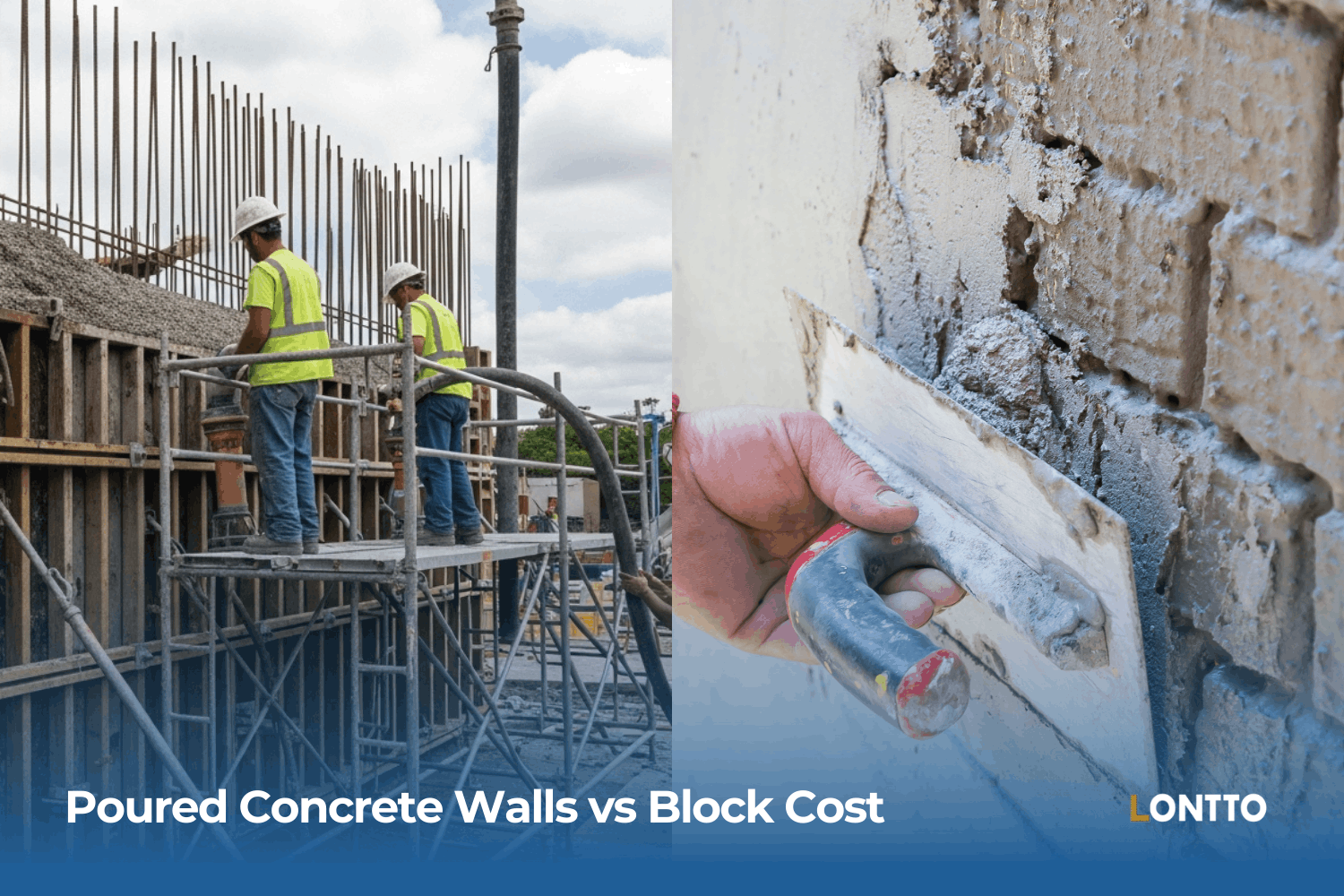
Что такое стены из монолитного бетона?
Стены из монолитного бетона формируются, когда бригады укладывают арматуру в бетонные формы, закрепленные на фундаменте, а затем заливают бетон одним сплошным слоем. После затвердевания получается прочная бетонная стена без растворных швов. Такая стена из монолитного бетона приобретает структурную прочность за счет расстояния между арматурой и ее толщины.
Строители часто используют эту систему для заливки бетонного фундамента, ограждений подвалов и стен, требующих повышенной поперечной прочности. Поскольку стена не содержит растворных швов, конструкция ведет себя как единый непрерывный участок. Эта непрерывность влияет на водонепроницаемость деталей и ожидания по долгосрочному обслуживанию.
Что такое стена из бетонных блоков?
A стена из бетонных блоков Используются уложенные друг на друга бетонные кладочные блоки, также называемые CMU или кладочными блоками, скрепленные раствором. Рабочие вставляют арматуру в выбранные стержни и заполняют их раствором для усиления структурных зон. Такие стены из КМУ создают модульный фундамент, а не единую сплошную конструкцию.
Для достижения несущей способности блочный фундамент зависит от правильно армированных участков. При полной заделке арматурой блочные фундаменты обладают хорошей несущей способностью при вертикальных нагрузках. Растворные швы и выравнивание блоков играют непосредственную роль в поведении конструкции и контроле влажности.
Установленная разбивка: Стоимость стен из монолитного бетона и блоков
В приведенной ниже таблице указаны измеримые ценовые переменные, определяющие стоимость стен из монолитного бетона по сравнению со стоимостью блоков в коммерческих проектах. Диапазоны отражают коммерческие оценки для установка за квадратный фут.
| Фактор стоимости | Залитые бетоном стены | Бетонная стена |
|---|---|---|
| Установленная цена | $16-$22 за квадратный фут | $12-$18 за квадратный фут |
| Основная движущая сила материала | Объем цемента и плотность арматуры | Бетонные блоки и раствор |
| Требование к оборудованию | Насосное оборудование и бетонные формы | Строительные леса и ручные инструменты |
| Распределение рабочей силы | Сформируйте экипаж и группу размещения | Квалифицированная бригада каменщиков |
| Время отверждения | Требуется отверждение перед установкой каркаса | Без задержки полимеризации |
| Водонепроницаемые обновления | Менее подвержены протечкам и часто легче водонепроницаемы | Скорее всего, потребуются покрытия, дренажи или пароизоляция |
| Уход за суставами | Ремонт швов не требуется, но трещины и проникновения могут потребовать ухода. | Может потребоваться ремонт растворных швов |
| Расходы на модификацию | Специальные режущие инструменты | Демонтаж стеновых блоков |
Стоимость установки в разбивке по типам стен
Цена предложения часто зависит от того, как подрядчики структурируют объем работ. Некоторые фирмы назначают цену за формовку и укладку вместе, в то время как в предложениях по кладке материал и труд могут быть разделены на отдельные статьи. Это различие меняет стратегию наценок и планирование на случай непредвиденных обстоятельств. Это также влияет на то, как рассчитываются заказы на изменения в ходе строительства.
Залитые бетоном стены
В ценах на монтаж стен из монолитного бетона основное внимание уделяется объему цемента, плотности стали и трудозатратам на опалубку. Мобилизация насосов и согласование готовой смеси увеличивают первоначальные инвестиции по сравнению с большинством блочных конструкций. Непрерывная укладка часто сокращает продолжительность строительства, тем самым повышая общую производительность при возведении больших стен.
Бетонная стена
При возведении стены из бетонных блоков затраты распределяются между отдельными блоками кладки и часами квалифицированного труда. Цена материала на единицу может показаться ниже, но трудоемкость увеличивает общее время установки. В небольших проектах меньшая зависимость от оборудования часто делает этот вариант выбором с меньшими первоначальными затратами.
Расходы на гидроизоляцию и дренаж
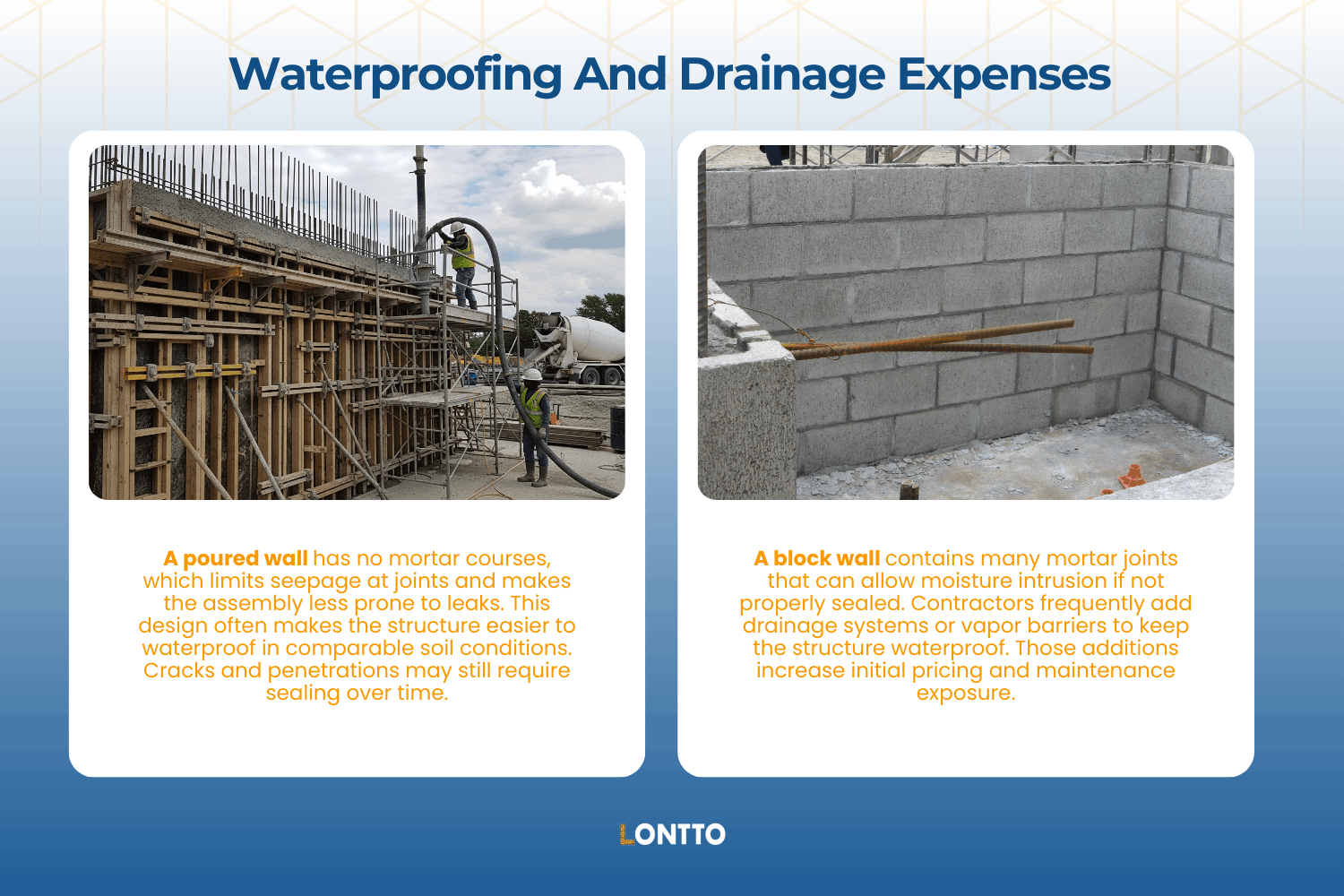
Уровень грунтовых вод играет непосредственную роль при составлении бюджета на контроль влажности. Участки с постоянными грунтовыми водами требуют более обширных наружных систем. Глубина котлована и трасса водоотвода могут увеличить трудозатраты. Гарантийные условия также могут меняться в зависимости от выбранной сборки стен.
- Залитая стена не имеет растворных швов, что ограничивает просачивание на стыках и делает конструкцию менее подверженной протечкам. Такая конструкция часто облегчает гидроизоляцию конструкции в сопоставимых грунтовых условиях. Трещины и проемы могут со временем потребовать герметизации.
- Стены из блоков содержат множество растворных швов, которые могут пропускать влагу, если их не заделать должным образом. Подрядчики часто добавляют дренажные системы или пароизоляцию, чтобы обеспечить водонепроницаемость конструкции. Эти дополнения увеличивают первоначальную цену и стоимость обслуживания.
Структурный риск и затраты на устранение последствий
Отчеты о грунтах влияют на то, как подрядчики распределяют средства на непредвиденные расходы. Ограниченные геотехнические данные вносят неопределенность в ценообразование до начала земляных работ. Когда условия залегания грунта хорошо задокументированы, ставки обычно снижаются. Четкое инженерное руководство снижает вероятность пересмотра конструкции в середине проекта.
Залитые бетоном стены
Залитый бетонный фундамент обеспечивает большую боковую прочность против гидростатического давления. Такая структурная способность может снизить вероятность того, что стена будет нуждаться в анкерах или скобах после движения грунта. Непрерывная конструкция уменьшает слабость стыков.
Бетонная стена
Для сохранения устойчивости блочных подпорных стен необходимо правильно укладывать цементный раствор и соблюдать расстояние между арматурой. Если за стеной скапливается вода, может возникнуть прогиб. Ремонт блочных фундаментов может включать анкерные системы для усиления поврежденных участков.
Расписание и накладные расходы
Сроки проведения инспекций могут изменить прогнозы производительности. Задержки между размещением и утверждением увеличивают расходы на надзор. При несоблюдении последовательности работ могут увеличиться сроки аренды оборудования. Структуры финансирования также усиливают влияние смещения графика на общие расходы.
Залитые бетоном стены
Залитая бетоном стена может быть быстро завершена, как только бетонные формы будут закреплены и начнется укладка. Время затвердевания бетона приостанавливает возведение каркаса, но сокращение продолжительности монтажа может ограничить необходимость в длительном присутствии бригады. На больших коммерческих объектах такое сокращение может снизить накладные расходы.
Бетонная стена
Установка блочного фундамента происходит постепенно, в зависимости от наличия рабочей силы. Более длительные сроки монтажа увеличивают расходы на общие условия в крупных проектах. При поэтапном строительстве гибкость может помочь согласовать последовательность работ с другими профессиями.
Затраты на модификацию и модернизацию
Будущие планы по заполнению помещений влияют на долгосрочное прогнозирование капитальных вложений. Здания, в которых ожидается изменение планировки, требуют гибкого бюджетирования. Плата за инженерную экспертизу может потребоваться при наличии структурных проникновений. Заблаговременное планирование таких корректировок повышает предсказуемость затрат.
Залитые бетоном стены
Для прорезания бетонной стены требуется оборудование для отбора керна и проверка конструкции для защиты заложенной арматуры. Каждое отверстие должно сохранять несущую способность и соответствовать местным строительным нормам. Работы по модификации часто стоят дороже из-за оборудования и инженерного надзора.
Бетонная стена
Блочная стена позволяет выборочно удалять кладочные блоки, когда владельцам необходимо построить проем в стене. Подрядчики могут укрепить измененные участки с помощью стали и цементного раствора если это требуется по правилам. Такая гибкость позволяет сократить расходы на реконструкцию развивающихся объектов.
Применение фундаментов и состояние участка
Условия участка определяют, что лучше выбрать для конкретного фундамента - стены из монолитного бетона или сборные конструкции из КМУ.
При высоком давлении на грунт или воздействии грунта ниже уровня земли сплошной залитый фундамент может снизить риск для конструкции и упростить контроль влажности. Такой подход позволяет возводить более высокие стены в тяжелых условиях эксплуатации.
Для внутренних помещений или условий с меньшей нагрузкой система из бетонных блоков может снизить стоимость монтажа. Если фундамент обладает хорошей несущей способностью и соответствует инженерно-строительным требованиям, сборные конструкции из КМУ могут стать экономически эффективной и адаптируемой стеновой системой для многих коммерческих применений.
Выбор стены в соответствии с вашим бюджетом
Стены из монолитного бетона и бетонных блоков по-разному влияют на стоимость проекта. Залитые стены часто обеспечивают большую боковую прочность и меньше подвержены воздействию влаги, в то время как блочные системы могут снизить первоначальные затраты и позволяют легче вносить изменения в дальнейшем. Трудозатраты, потребности в оборудовании и ограничения по срокам - все это играет роль при определении того, какая система обеспечивает наилучшую стоимость для коммерческого строительства.
Если вы сравниваете стоимость стен из монолитного бетона и блоков, то эффективность производства должна быть одним из факторов, влияющих на ваше решение. Имея более чем 30-летний опыт работы и более 10 патентов, компания Lontto разрабатывает и производит машины для изготовления бетонных блоков которые обеспечивают стабильную производительность и контролируют качество материалов. Это оборудование помогает подрядчикам управлять поставками для блочной стены или приготовление опорной смеси для залитого бетонного фундамента.
Говорите с нами чтобы оценить, какая производственная установка соответствует вашему рыночному спросу и долгосрочной стратегии развития.
Часто задаваемые вопросы о стоимости заливки бетонных стен и блоков
Какая стеновая система прослужит дольше - из бетона или бетонных блоков?
При правильном монтаже и уходе обе стены могут прослужить десятилетия, но стены из монолитного бетона часто требуют меньше внимания при долгосрочном обслуживании, поскольку не имеют растворных швов, через которые может проникать влага.
Влияют ли местные строительные нормы на то, можно ли использовать залитый бетон или бетонный блок?
Да, местные строительные нормы и правила могут влиять на то, какие стеновые системы разрешены для определенных проектов. Подрядчики и инженеры обычно изучают эти требования при проектировании, чтобы убедиться, что выбранная стена соответствует местным нормам.
Имеет ли значение тип грунта при выборе между стенами из бетона или бетонных блоков?
Да, состояние почвы может повлиять на то, какая система будет работать лучше с течением времени. На участках с глиной, высокими грунтовыми водами или тяжелыми боковыми грунтами лучше использовать стены из монолитного бетона, так как сплошная конструкция обеспечивает большую устойчивость к смещению нагрузки. Стены из бетонных блоков могут хорошо работать и в условиях стабильного грунта, но они часто требуют тщательного армирования, дренажа и гидроизоляции для управления влажностью и давлением.
Вернуться к началу: Стены из монолитного бетона и блоков: как выбор стены влияет на ваш бюджет

Меня зовут Чао Чжан, я работаю в сфере производства кирпича уже более 10 лет. У меня есть глубокое понимание и исследования различных моделей машин для производства блоков, особенно автоматических машин для производства кирпича, машин для производства бетонных блоков, машин для производства блоков из прессованной земли, машин для производства глиняного кирпича, машин для производства цементного кирпича. У меня есть особое понимание этой отрасли. Я могу помочь своим клиентам выбрать подходящую машину для производства кирпича и помочь им в проектировании и строительстве завода по производству кирпича. Если вы хотите узнать все о машинах для производства кирпича, пожалуйста, свяжитесь со мной. Я буду рад помочь вам.

 Контакты
 Цена котировки
 Позвоните нам