
 RU
RU  EN
EN  FR
FR  ES
ES 

 Экспресс


 Получить цену
Спрос на машины для производства блоков обусловлен расширением городов и ростом инфраструктуры в развивающихся регионах. Программы строительства доступного жилья повышают спрос на продукцию, что способствует увеличению объемов производства каждой машины для производства цементных блоков в действующих производственных линиях.
Более тяжелые блоки поддерживают конструкцию стен, что делает их пригодными для использования в несущих конструкциях по сравнению с более легкими вариантами. Стандартные размеры соответствуют практике кладки, что позволяет легче интегрировать их в существующие рабочие процессы машин для производства кирпича.
Высокопроизводительные системы поддерживают сжатые сроки реализации проектов, обеспечивая стабильное выполнение ежедневных производственных заданий. Автоматизация повышает согласованность и снижает количество поломок, что помогает каждой машине-изготовителю выпускать однородные изделия с меньшими потерями при обработке.
Улучшенный контроль размеров ограничивает внесение поправок на месте, что поддерживает точность укладки при вибрации блоков для окончательного выравнивания. Сокращение отходов материала повышает эффективность, что увеличивает рентабельность при производстве высококачественных бетонных блоков.
Что искать в поставщиках машин для производства цементных блоков
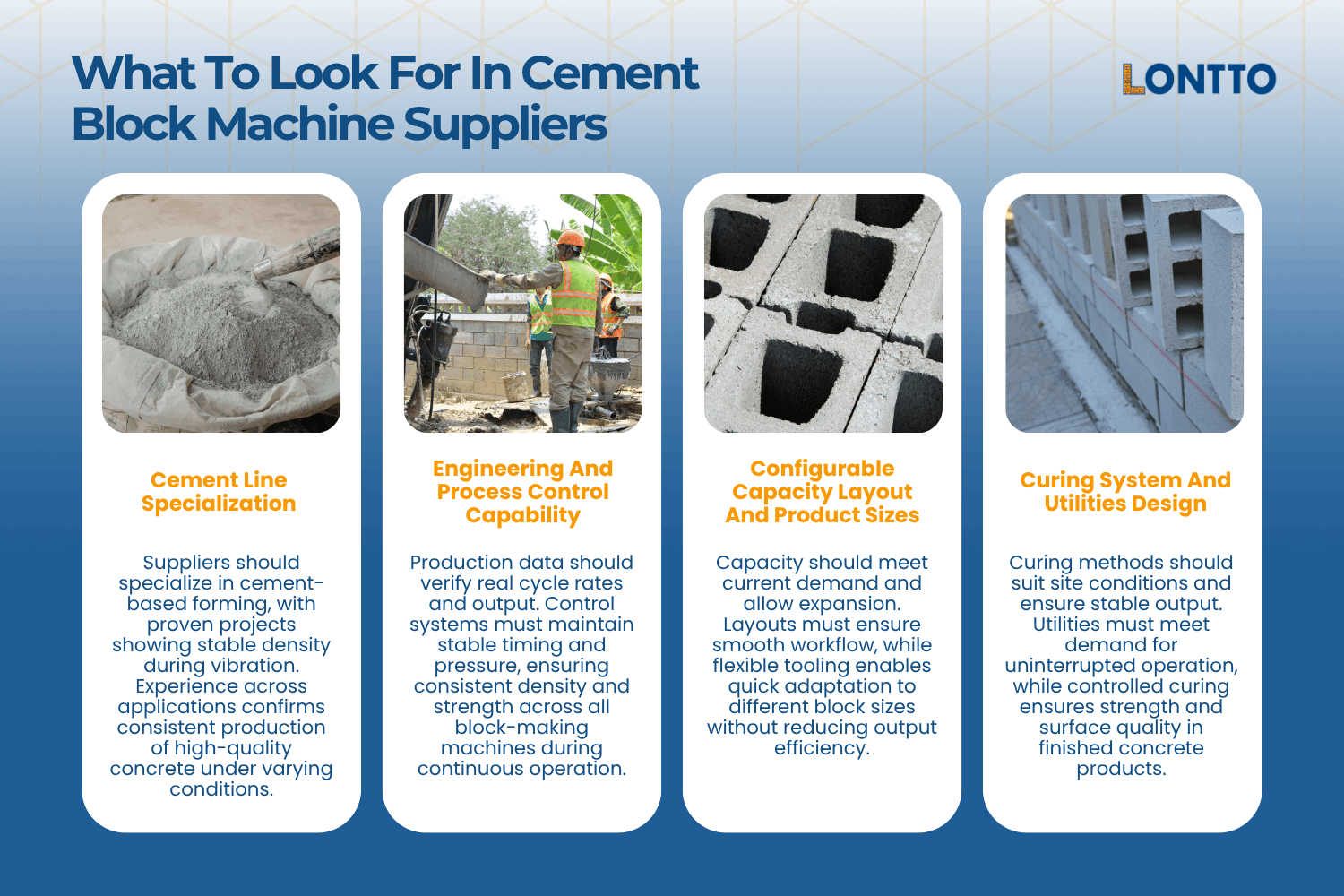
Выбор поставщиков оборудования требует проверенных данных по заводу, которые соответствуют вашим целевым показателям. Квалифицированный поставщик оборудования для производства цементных блоков должен представить реальные производственные результаты с определенными диапазонами производительности для каждой установленной единицы оборудования.
Полный объем системы должен охватывать все этапы обработки материалов, что подтверждает, что машина-изготовитель поддерживает непрерывное производство.
Специализация цементной линии
Специализированный поставщик специализируется на оборудовании, предназначенном для формования на основе цемента в условиях контролируемой нагрузки. Ссылки на проект должны демонстрировать, как каждая машина для производства кирпича сохраняет плотность при вибрации смеси во время циклов уплотнения. Опыт применения в различных областях показывает, что система может обеспечить высококачественный бетон в различных условиях производства.
Инженерные возможности и возможности управления процессом
Производственные данные должны определять количество циклов в час и производительность за смену в реальных условиях эксплуатации. Системы управления должны регулировать время и давление таким образом, чтобы каждый цикл оставался стабильным на всех блокоделательных машинах. Последовательный контроль позволяет поддерживать плотность и прочность в заданных пределах во время непрерывной работы.
Настраиваемые вместимость, расположение и размеры изделий
Планирование производственных мощностей должно соответствовать текущему спросу и в то же время предусматривать возможность расширения за счет установленных машин для производства блоков. Варианты планировки должны поддерживать плавный поток между станциями и сохранять непрерывность на каждом этапе работы машины для производства кирпича. Гибкость оснастки позволяет адаптировать машину для производства цементных блоков к различным размерам без снижения производительности.
Проектирование системы полимеризации и инженерных коммуникаций
Метод отверждения должен соответствовать условиям участка и обеспечивать стабильную производительность на всех установленных производственных линиях. Системы электро- и водоснабжения должны соответствовать уровню спроса, чтобы машина-изготовитель работала без перебоев. Контролируемое твердение обеспечивает конечную прочность и качество поверхности высококачественных бетонных изделий.
Топ 5 цементный блок машина поставщиков
1. QGM/Zenith
Компания QGM Quangong Machinery является признанным поставщиком оборудования для производства цементных блоков с интегрированной инженерной и производственной поддержкой по всему миру. Компания разрабатывает оборудование для производства блоков с использованием немецкой системной конструкции, которая повышает прочность и стабилизирует долговечность машин для производства бетона, используемых в современном производстве.
ZN1000C - это полностью автоматическая машина для производства бетонных блоков, предназначенная для контролируемого формования и стабильной производительности под нагрузкой. ПЛК Siemens управляет производственным процессом, регулирует каждую партию и обеспечивает стабильную формовку блоков для плотных бетонных блоков, таких как брусчатка и бетонные пустотелые блоки.
Усиленная конструкция формы ограничивает смещение материала в процессе производства бетона, обеспечивая равномерную плотность и надежный выход кирпича в рамках компактной производственной линии.
- Система управления: Поддерживает синхронизацию циклов и осуществляет диагностику всех машин блока.
- Вибрационная система: Прикладывает усилие для повышения плотности при изготовлении кирпича.
- Система кормления: Равномерно распределяет сырье для стабильного производства бетонных блоков.
- Гидравлическая станция: Регулирует давление в блокоделательных машинах для повторяющегося формования.
- Конструкция рамы: Поддерживает длительную работу в тяжелых условиях.
| Плюсы | Cons |
|---|---|
| ✅ Работает с различными бетонными смесями и поддерживает подачу бетона с внешних заводов. ✅ Поддерживает укладку брусчатки, бордюрного камня и блоков с быстрой сменой каждой формы. ✅ Интегрируется с системами штабелеров или блокоукладчиков для упрощения обработки готового кирпича. |
❌ В зависимости от выбранной формы некоторые установки могут ограничивать форматы интерлока или укладки. |
Need to Produce Blocks at Scale?
Our block making machines are built for commercial and industrial production. Get expert advice and a custom price quote — we respond within 24 hours.
2. Lontto
Компания Lontto производит блочные машины на трех заводах, где есть специальные цеха для производства пресс-форм и термообработки.
На каждом предприятии обработка и сборка выполняются последовательно, что позволяет контролировать допуски на формовку при производстве бетона с использованием бетоноукладочных машин для мелкосерийного производства. Контролируемый рабочий процесс на этих этапах снижает разброс в обработке сырья и поддерживает стабильные условия формования.
LMT4-26 - это полуавтоматическая машина для производства бетонных блоков, предназначенная для недорогого производства кирпича с постоянным циклом. В машине используется компактная рама с шестью стальными опорами и направляющими, которые сохраняют центровку при многократных циклах.
Вибрационный двигатель уплотняет цементную смесь в плотные бетонные блоки, в том числе пустотелые, прочность которых выше, чем у керамзитобетонных блоков. В систему интегрированы бетоносмеситель и конвейер для подачи каждой порции, а сменные комплекты форм позволяют менять формат в рамках одной производственной линии.
- Конструкция рамы: Используется многоколонная опора для сохранения выравнивания при интенсивных нагрузках.
- Вибрационная система: Уплотняет бетонную пустотелую смесь для повышения плотности при изготовлении кирпича.
- Система плесени: Переключение между типами блоков с помощью сменных комплектов форм.
- Материальный поток: Подается из встроенного бетоносмесителя для стабилизации каждого замеса.
- Дизайн операции: Упрощает управление для небольших команд, использующих станки для изготовления блоков.
| Плюсы | Cons |
|---|---|
| ✅ Поставляется в компактном виде, что упрощает перемещение вилочным погрузчиком и сокращает время на установку в каждом месте доставки. ✅ Расширяется за счет дополнительных устройств, таких как дозатор или внешнее оборудование для производства бетона. ✅ Низкое потребление энергии по сравнению с крупными системами для производства бетонных блоков, что обеспечивает стабильную работу в условиях ограниченного энергоснабжения. |
❌ Требует большего участия оператора, чем полностью автоматические системы блокировки. |
3. SL Machinery
Компания SL Machinery производит оборудование для цементной промышленности с интегрированными системами, которые контролируют формование от входа до формования.
Конструкция оборудования контролирует подачу сырья и поддерживает стабильные условия при производстве бетона на всех машинах, используемых в современном производстве. Автоматизированные этапы управляют смешиванием, формованием и передачей, снижая разброс и обеспечивая стабильный выход продукции в каждом цикле.
Серия Q(F)T-A представляет собой полностью автоматическую машину для производства бетонных блоков, предназначенную для высокоскоростного изготовления кирпича с контролируемым временем цикла. Сервосистема управляет движением формования, стабилизируя реакцию и улучшая воспроизводимость партий при различных нагрузках.
С помощью сменных систем форм установка уплотняет цементную смесь в плотные бетонные блоки, включая блоки для укладки, стандартные кирпичи и конструкционные форматы. Производительность масштабируется между такими моделями, как Q(F)T10 и Q(F)T8, что позволяет машине для производства кирпича поддерживать постоянный объем в рамках структурированной производственной линии.
- Сервосистема: Регулирует скорость формования для стабилизации производительности блокоделательных машин.
- Система плесени: Переключение форматов для нескольких типов блоков с помощью сменных комплектов пресс-форм.
- Управление циклом: Соблюдает время повтора для обеспечения стабильного производства бетонных блоков.
- Материальный поток: Обеспечивает равномерную подачу при изготовлении бетона для каждого замеса.
- Дизайн операции: Обеспечивает простоту эксплуатации системы на автоматических блочных машинах.
| Плюсы | Cons |
|---|---|
| ✅ Регулирует размер паллет и высоту изделий в соответствии со спецификациями проекта. ✅ Формирует более чистые края и поверхности, что улучшает приемку при укладке на видном месте. ✅ Сокращение избыточного расхода смеси, что снижает количество отходов при производстве бетонных блоков. |
❌ Установка и ввод в эксплуатацию занимают больше времени, чем у базового блочного оборудования. |
4. Hongfa Machinery
Четыре производственные базы обеспечивают выпуск продукции Hongfa Machinery, а внутренние линии производят бетонные блоки для непосредственного тестирования.
На этих линиях производятся реальные смеси, что позволяет выявить проблемы с формованием на ранней стадии, улучшая обработку сырья на всех бетонных машинах, используемых в активном производстве. Непрерывная обратная связь совершенствует контроль формования в процессе производства бетона, поддерживая стабильные результаты при различных соотношениях материалов.
QT8-15D работает как полностью автоматическая машина для производства бетонных блоков, предназначенная для высокопроизводительного изготовления кирпича с контролируемым циклом. ПЛК Siemens управляет временем цикла и стабилизирует каждую партию, обеспечивая стабильное формование блоков, несмотря на изменение подачи материала.
Система переменной вибрации регулирует частоту во время работы, уплотняя цементную смесь в плотные бетонные блоки как в формате брусчатки, так и стандартного кирпича. Гидравлическая станция регулирует давление формования, а контролируемая подача улучшает распределение в каждой форме в рамках структурированной производственной линии.
- Система кормления: Управляет потоком материалов для повышения плотности на блокоделательных машинах.
- Вибрационная система: Регулирует частоту для оптимального уплотнения при изготовлении кирпича.
- Система управления: Использует логику ПЛК для стабилизации циклов при производстве бетонных блоков.
- Гидравлическая система: Регулирует давление для равномерного формования в блочных машинах.
- Контроль частоты: Снижение энергопотребления при сохранении производительности на всех операциях машины для производства кирпича.
| Плюсы | Cons |
|---|---|
| ✅ Работа с широким диапазоном высот от 50 мм до 250 мм без перенастройки системы формирования стержней. ✅ Увеличение производительности за цикл благодаря большому количеству полостей, что повышает выход продукции с каждой пресс-формы. ✅ Устанавливается между машинами для производства блоков начального и большого размера, что позволяет поэтапно расширять завод. |
❌ Фиксированная зона формовки ограничивает возможность адаптации к системам паллет других размеров. |
5. Gongyi Xiaoyi Jinwang Machinery Factory
Основанная в 2006 году, компания работает в зоне развития Gongyi и имеет производственные системы, сертифицированные по ISO.
Производство включает в себя несколько линий оборудования, которые поддерживают комплексные установки для производства бетона и работают с различными видами сырья для мелкосерийного производства. Структура персонала и ассортимент оборудования обеспечивают стабильную поставку блочных машин, отвечающих различным требованиям.
QTJ4-22 - это автоматическая установка для производства бетонных блоков, предназначенная для гибкого производства кирпича с умеренной производительностью. Установка формирует бетонные блоки, такие как брусчатка и межблочные блоки, используя сменные системы форм.
Компактная рама обеспечивает стабильную формовку блоков, а система обрабатывает цементные смеси, включая летучую золу, во время каждого замеса. Кирпичная машина работает в рамках упрощенной производственной линии, поддерживая небольшие предприятия, использующие масштабируемые конфигурации машин для производства блоков.
- Ассортимент продукции: Производит различные виды блоков, включая интерлок и брусчатку.
- Потребляемый материал: Поддерживает смешивание сырьевых смесей при изготовлении бетона.
- Система плесени: Используются сменные комплекты пресс-форм для гибкой производительности блочных машин.
- Область применения: Подходит для небольших установок с компактной компоновкой блочного оборудования.
- Дизайн обработки: Система проста в управлении, что позволяет использовать ее в качестве базовой машины для производства кирпича.
| Плюсы | Cons |
|---|---|
| ✅ Охватывает несколько уровней производительности от 800 до 12 000 единиц продукции в смену, в зависимости от установки. ✅ Переключение между типами изделий без остановки производства бетонных блоков. ✅ Работает со смесями с щебнем и золой без существенной корректировки. |
❌ Различные форматы продукции создают неравномерные сроки в рамках одного производственного графика. |
Цементный блок машина поставщики часто задаваемые вопросы
В каких проектах используются поставщики машин для производства цементных блоков?
Поставщики оборудования для производства цементных блоков обслуживают проекты, в которых требуются стандартные кладочные блоки для конструкционных и неконструкционных работ.
Типичными областями применения являются жилые дома и межевые стены, а также школы и больницы, где по-прежнему широко используются традиционные блочные системы. Небольшие коммерческие здания и базовые инфраструктурные проекты используют эти машины, когда более тяжелые блоки не подходят для несущих условий.
Являются ли поставщики машин для производства цементных блоков только для крупных производителей?
Поставщики оборудования для производства цементных блоков предлагают оборудование различных производственных масштабов, чтобы соответствовать различным размерам бизнеса. Небольшие предприятия используют компактные установки для начала производства, в то время как более крупные системы поддерживают более высокую производительность по мере роста спроса. Такой ассортимент позволяет подрядчикам и региональным строителям расширять мощности без замены всей производственной установки.
Поддерживают ли поставщики машин для производства цементных блоков альтернативные материалы?
Поставщики оборудования для производства цементных блоков предлагают системы, которые работают с различными видами смесей, помимо стандартного бетона. Некоторые машины перерабатывают вторичные заполнители или цветные материалы, что позволяет создавать различные варианты отделки поверхности и типы изделий. Стандартные смеси остаются совместимыми, что позволяет одной и той же системе при необходимости производить обычные бетонные блоки.
Вернуться к началу: Поставщики цементных блоков для производства бетона

Обращайтесь к нашим Эксперт по кирпичным машинам
Свяжитесь с нашей приятной командой сегодня, чтобы получить оценку стоимости машины для производства блоков.

Меня зовут Чао Чжан, я работаю в сфере производства кирпича уже более 10 лет. У меня есть глубокое понимание и исследования различных моделей машин для производства блоков, особенно автоматических машин для производства кирпича, машин для производства бетонных блоков, машин для производства блоков из прессованной земли, машин для производства глиняного кирпича, машин для производства цементного кирпича. У меня есть особое понимание этой отрасли. Я могу помочь своим клиентам выбрать подходящую машину для производства кирпича и помочь им в проектировании и строительстве завода по производству кирпича. Если вы хотите узнать все о машинах для производства кирпича, пожалуйста, свяжитесь со мной. Я буду рад помочь вам.
 Цена котировки
 Позвоните нам