
 FR
FR  EN
EN  RU
RU  ES
ES 

 Livraison rapide


 Obtenir un prix
Un machine à fabriquer des blocs de ponte est une unité mobile qui fabrique des blocs de béton sur place et les dépose directement sur le sol. Après chaque cycle de compression, un bloc fini atterrit sur la dalle préparée sous le cadre.
Les constructeurs obtiennent une rangée complète après chaque chute, ce qui élimine totalement le besoin d'une infrastructure d'usine. Ce sont les programmes de travail qui déterminent la production de blocs de béton, et non les délais de livraison des fournisseurs. Le nom "ponte" décrit exactement le fonctionnement de la machine sur le terrain.
Après chaque cycle, la machine de fabrication de blocs avance et pose une nouvelle rangée derrière elle. Aucune installation permanente de l'usine ne limite l'endroit où l'unité de fabrication de blocs de ponte peut fonctionner. La production sur site élimine les contraintes de commandes minimales de la chaîne d'approvisionnement.
Comment fonctionne une machine à blocs de ponte ?
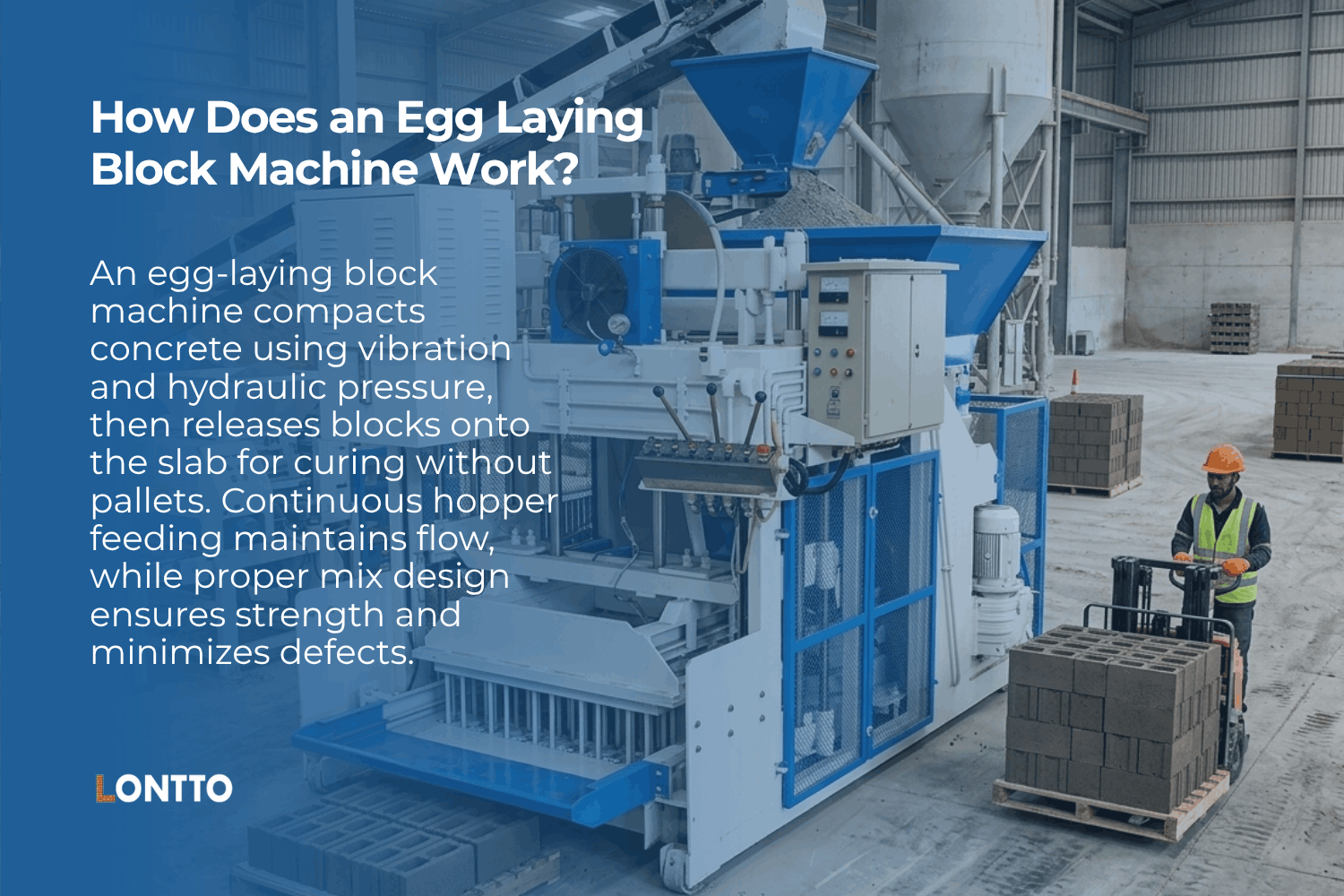
Avant le démoulage, une machine à fabriquer des blocs de béton par ponte applique une pression hydraulique pour compacter un mélange préparé en une unité finie. Des moteurs vibrants éliminent les poches d'air de la cavité du moule avant la compression finale, verrouillant ainsi la forme de chaque bloc.
Une fois le cycle terminé, le moule se soulève, Le bloc formé reste sur la dalle préparée. La surface du sol sert de lit de durcissement, ce qui élimine entièrement la manipulation des palettes du flux de travail. La trémie alimente le moule en matière première au début de chaque chute.
Le classement correct des agrégats et le rapport eau/ciment déterminent la résistance à la compression de chaque unité produite par la machine. Au cours de la chute précédente, une deuxième trémie a été chargée pour assurer la continuité de la production de blocs. Un mauvais calibrage du mélange à ce stade aggrave les taux de rejet sur l'ensemble de l'équipe.
Caractéristiques et composants
Les boîtes à moules interchangeables permettent aux machines de fabrication de blocs de ponte de passer d'un bloc de taille différente à un autre sur un même châssis. Les cadres en acier de 3 mm d'épaisseur absorbent les vibrations constantes sans fatigue structurelle pendant toute la durée de la production. Les modèles à double alimentation assurent la continuité des opérations sur les sites éloignés où l'alimentation électrique n'est pas fiable.
La machine est livrée avec ces composants :
- Moteurs de vibroformage : Les vibrateurs industriels font vibrer la cavité du moule rempli avant la compression, produisant ainsi des unités de haute densité avec une résistance uniforme.
- Système hydraulique : Un vérin dédié commande à la fois la force de compression et le déplacement vers l'avant, délivrant une pression hydraulique constante à chaque cycle de chute.
- Assemblage de la trémie : Un système d'alimentation par étapes maintient la matière première en file d'attente afin que la machine à fabriquer les blocs puisse passer d'une goutte à l'autre sans interruption.
- Cadre de mobilité : Des roues robustes avec des mécanismes de verrouillage sécurisent la machine pendant la compression et permettent de la repositionner entre les chutes sans outils.
Types de machines à pondre
Adaptés aux conditions d'alimentation des sites et aux budgets d'investissement, les blocs de ponte sont disponibles en trois versions distinctes types de machines. Les modèles manuels reposent sur des mécanismes actionnés à la main pour une production à petite échelle sans électricité.
Au niveau intermédiaire, les cadres semi-automatiques gèrent la compression tandis que les opérateurs contrôlent le chargement entre les gouttes. Les unités entièrement automatiques exécutent la séquence de production complète sans intervention manuelle.
Les trois configurations sont les suivantes :
- Manuel : Compression et démoulage manuels pour les sites éloignés ou les travaux de faible volume sans alimentation électrique fiable.
- Semi-automatique : Compression mécanique et démoulage avec chargement contrôlé par l'opérateur et mouvement vers l'avant entre les gouttes.
- Entièrement automatique : Séquences programmables d'alimentation, de compression et de déplacement qui maximisent la productivité sur les contrats à grande échelle avec une demande continue de blocs de béton.
Capacité de production
Dans le cadre de contrats résidentiels et commerciaux, les unités de ponte à petite échelle produisent de 800 à 1 000 blocs par quart de travail de huit heures. Les configurations à grande échelle permettent de produire quotidiennement plus de 5 000 briques ou 2 000 unités creuses. Les temps de cycle sont de 45 à 90 secondes par goutte terminée. La production nominale suppose que la machine fonctionne en continu pendant toute la durée d'une équipe de production.
Pour les entrepreneurs qui évaluent les coûts d'investissement par rapport au volume, des capacités de production plus faibles offrent une solution pratique. Le pré-mélange des matériaux donne aux équipes un avantage sur les opérations réactives de fabrication de blocs. La discipline de l'opérateur à l'étape du dosage détermine si la machine atteint la production journalière nominale.
Les sites qui ne procèdent pas au pré-lardage sont systématiquement en deçà de la capacité nominale de production quotidienne de blocs de la machine de ponte.
Types de blocs produits
En changeant la boîte de moules selon les besoins, une seule machine à fabriquer des blocs de ponte couvre à la fois la structure et le paysage. Chaque changement de moule permet de repositionner la machine à blocs de béton, qui passe en quelques minutes des unités murales aux profils de pavés.
La machine produit ces différents types d'unités de béton :
- Bloc creux : Unités de 390 mm x 190 mm x 140 mm pour les systèmes de murs porteurs dans la construction résidentielle et commerciale.
- Blocs solides : Profilés à résistance maximale à la compression pour les murs où la capacité de charge structurelle est prioritaire par rapport au poids du matériau.
- Pavés : Profilés de pavés qui s'emboîtent sous la circulation des piétons et des véhicules pour les applications de paysage et de délimitation sans mortier.
- Unités à emboîtement : Profilés modulaires en béton pour murs de soutènement et structures de délimitation à montage rapide ne nécessitant pas de lit de mortier.
Need to Produce Blocks at Scale?
Our block making machines are built for commercial and industrial production. Get expert advice and a custom price quote — we respond within 24 hours.
Avantages d'une machine à blocs de ponte
Un constructeur qui dirige le meilleur équipement pour blocs de ponte contrôle les délais de production, la qualité et les coûts d'approvisionnement sur le site. Aucune dépendance à l'égard de fournisseurs externes ne vient perturber le calendrier ou gonfler le coût global du projet. La réduction des factures de fret et la suppression des contraintes liées aux commandes minimales permettent de rembourser plus rapidement le prix d'achat.
Les avantages sont les suivants
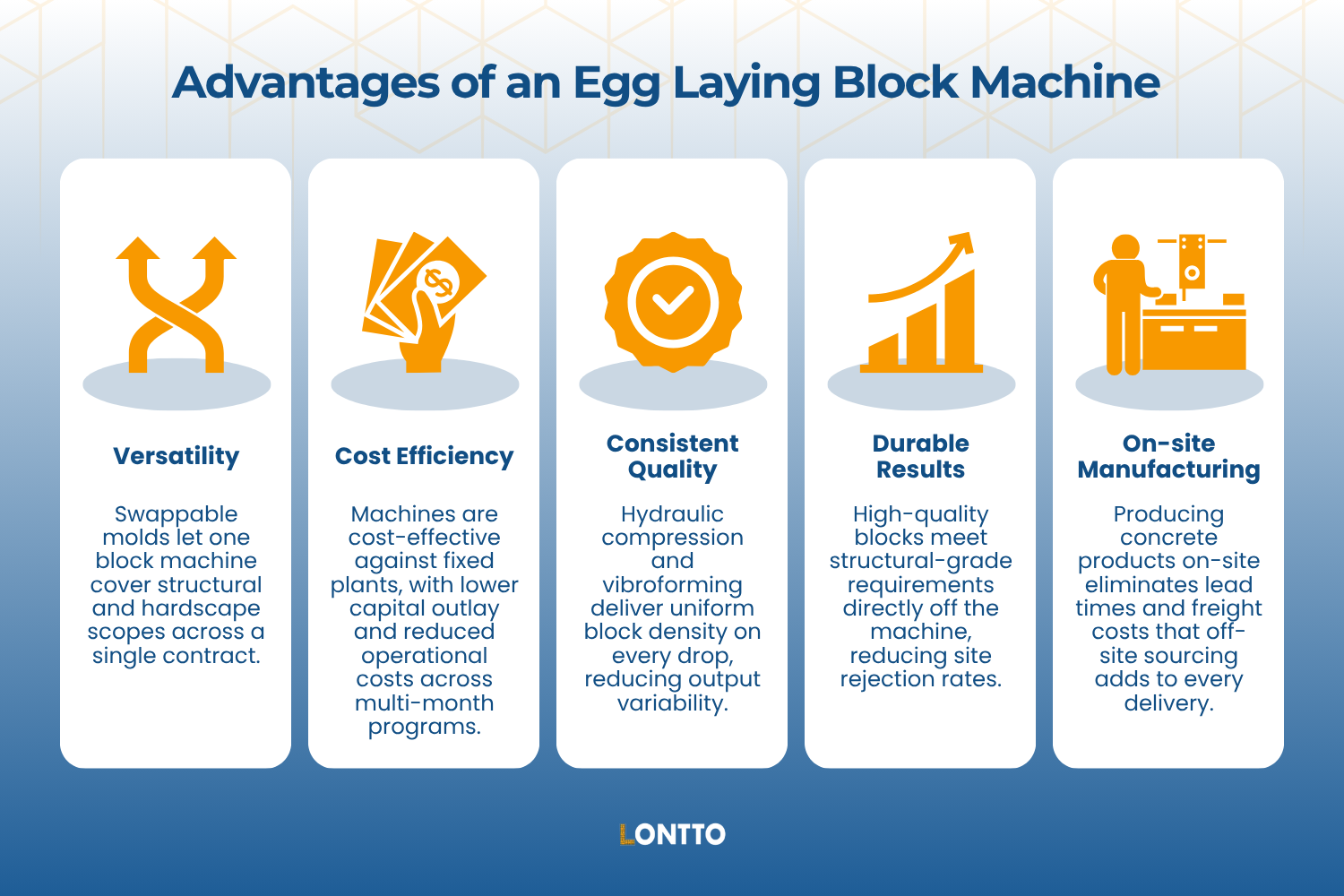
- Polyvalence : Les moules interchangeables permettent à une seule machine à blocs de couvrir les travaux de structure et d'aménagement du paysage dans le cadre d'un seul contrat.
- Le rapport coût-efficacité : Les machines sont rentables par rapport aux installations fixes, avec des dépenses d'investissement moindres et des coûts d'exploitation réduits dans le cadre de programmes plurimensuels.
- Qualité constante : La compression hydraulique et le vibroformage permettent d'obtenir une densité de bloc uniforme à chaque chute, réduisant ainsi la variabilité de la production.
- Des résultats durables : Les blocs de haute qualité répondent aux exigences de qualité structurelle directement à la sortie de la machine, ce qui réduit les taux de rejet sur le chantier.
- Fabrication sur place : La fabrication de produits en béton sur place élimine les délais et les frais de transport que l'approvisionnement hors site ajoute à chaque livraison.
Applications
Dans les projets où les coûts de transport rendent l'approvisionnement hors site peu rentable, l'équipement de pose d'œufs offre le meilleur retour sur investissement. Les configurations automatiques s'étendent des constructions résidentielles aux projets commerciaux à plusieurs étages sur une seule machine.
Les projets les plus courants sont les suivants
- Construction résidentielle : Maisons et murs d'enceinte où la demande régulière de blocs ne justifie pas l'investissement d'une installation fixe.
- Sites distants : Endroits situés au-delà des réseaux de livraison de matériaux de construction fiables, où la production de blocs de béton sur place est la seule option pratique.
- Contrats mixtes : Des travaux couvrant les domaines de la structure et du paysage couverts par une seule machine à poser des blocs avec des moules interchangeables.
- Travaux commerciaux à grande échelle : Les unités entièrement automatiques permettent d'assurer les volumes de production de blocs exigés par les programmes de construction à plusieurs étages.
Entretien et fonctionnement
L'entretien programmé d'une machine à fabriquer des blocs de béton permet de maintenir la qualité de la production et de prolonger la durée de vie des projets de longue durée. Après chaque session, le nettoyage du moule empêche les résidus de béton de durcir à l'intérieur de la cavité et de déformer les dimensions du bloc.
Les inspections du système hydraulique au début de l'équipe permettent de détecter les joints de vérin desserrés avant la perte de pression en cours de route. Des opérateurs formés couvrent les rapports de mélange et les contrôles avant d'entamer toute équipe de production non supervisée.
Les tâches d'entretien recommandées sont les suivantes
- Entretien de la boîte à moules : Nettoyer les résidus après chaque session pour protéger les dimensions de la cavité et assurer la cohérence du bloc lors de la prochaine chute.
- Contrôle des conduites hydrauliques : Inspecter les joints et les raccords des vérins chaque matin afin d'éviter les pertes de pression lors des cycles de compression.
- Contrôle des moteurs vibrants : Confirmer l'intégrité du support et le fonctionnement du moteur au poste de travail afin de maintenir la force de compactage pour laquelle la machine a été calibrée.
- Certification de l'opérateur : Couvrir les ratios de mélange, les contrôles des machines et les procédures d'urgence avant qu'un membre de l'équipe n'effectue une période de production sans supervision.
Lontto fabrique des pondeuses machines à fabriquer des blocs pour les environnements de production exigeants et expédie des équipements dans plus de 100 pays à travers le monde. Chaque pondeuse quitte l'usine après avoir été testée selon des normes de production de qualité commerciale, ce qui permet aux entrepreneurs d'obtenir des performances fiables en matière de fabrication de blocs dès la première équipe de production.
Contacter Lontto pour discuter de vos besoins en matière de machine de fabrication de blocs de ponte, afin que nous puissions vous aider à trouver celle qui convient le mieux à votre travail.
Machine à fabriquer des blocs de ponte FAQs
Combien coûte une machine à fabriquer des blocs de ponte ?
Les modèles de blocs de ponte manuels ou portables commencent aux alentours de $2 000 à $3 000, ce qui les rend accessibles aux petits entrepreneurs et aux autoconstructeurs. Les unités hydrauliques semi-automatiques vont de $5 000 à $10 000, en fonction de la capacité de production. Les configurations entièrement automatiques avec une capacité de production de blocs élevés atteignent $12 000 à $22 000 ou plus, en fonction des caractéristiques et de la marque de la machine.
Une machine à blocs de ponte peut-elle fonctionner sans électricité ?
Les modèles manuels reposent entièrement sur des mécanismes actionnés à la main et ne nécessitent aucune alimentation électrique pour fonctionner. Les machines à double alimentation combinent des moteurs électriques et des moteurs diesel, ce qui permet de maintenir la production en bloc pendant les pannes ou sur les sites éloignés. Ces deux configurations conviennent aux entrepreneurs qui travaillent dans des zones où l'alimentation électrique est peu fiable ou inexistante.
Combien de temps faut-il pour former un opérateur ?
La formation de base des opérateurs de machines de ponte dure généralement un à deux jours. Les opérateurs apprennent les ratios de mélange de béton, les commandes de la machine, les procédures de sécurité et le nettoyage de routine des moules. La conception simple de la machine exige beaucoup moins de compétences techniques qu'une usine de fabrication de blocs stationnaire.
Retour en haut de la page : Qu'est-ce qu'une machine à blocs de ponte ?

Parlez à notre Expert en machines à briques
Contactez dès aujourd'hui notre équipe sympathique pour obtenir une estimation du prix d'une machine à blocs.

Je m'appelle Chao Zhang et je travaille dans l'industrie de la fabrication de briques depuis plus de 10 ans. J'ai une connaissance approfondie et des recherches sur différents modèles de machines de fabrication de blocs, en particulier les machines automatiques à fabriquer des briques, les machines à fabriquer des blocs de béton, les machines à fabriquer des blocs de terre comprimée, les machines à fabriquer des briques d'argile, les machines à fabriquer des briques de ciment. J'ai une connaissance particulière de ce secteur. Je peux aider mes clients à choisir la machine à briques appropriée et les assister dans la conception et la construction d'une usine de production de briques. Si vous voulez tout savoir sur les machines à fabriquer des briques, n'hésitez pas à me contacter. Je me ferai un plaisir de vous aider.
 Devis
Devis Appelez-nous